In the modern media landscape, we aren’t suffering from a lack of information. On the contrary, we are drowning in it. On any given afternoon, a reader might see a push notification about airstrikes in the Middle East, a headline about shifting oil prices, and a social media snippet regarding local environmental concerns, all within the span of a few hours.
The problem is that these pieces of information exist as isolated islands. For the reader, the burden of building a bridge between them is becoming too heavy to bear. We are at a tipping point where the primary challenge for newsrooms is no longer just publishing or reach. It is the context in journalism.
To survive and remain relevant, newsrooms must transition beyond being mere content factories. They need to embrace a new category of media infrastructure: the context layer.
More News, Less Understanding
There is more news than ever before, yet it has never been harder to understand what is actually happening. We have moved from an era of information scarcity to one of chronic fragmentation.
Today, stories unfold across dozens of separate articles, threads, and platforms. Since each piece of content is often treated as a standalone product, the "big picture" is obscured. This forces the reader to do the heavy lifting: connecting the dots, remembering what happened last week, and filtering out the noise. When the "entry cost" of understanding a story becomes too high, readers simply opt out.
The Death of the "Front Door"
This fragmentation is driven by a fundamental shift in how we consume media. Generations aged 35 and older grew up with structured news. There was a morning paper with clear sections, an 8 PM bulletin with a defined start and end, and a linear progression of information.
In contrast, audiences under 35, who are significantly more likely to avoid the news because it is "too hard to follow", grew up in a world of push notifications and algorithmic feeds. For them, there is no "front door" to a news brand. They enter stories mid-stream, often through a snippet on a social platform (Reuters Institute Digital News Report, 2025).
When news is published as a series of disconnected updates, it assumes the reader already has the background knowledge to catch up. But in a digital-first environment, that background context is exactly what’s missing. Much of journalism is still designed for the "front door" reader, leaving younger audiences behind in a sea of snippets with no clear beginning or end.
What’s Missing: The Third Layer
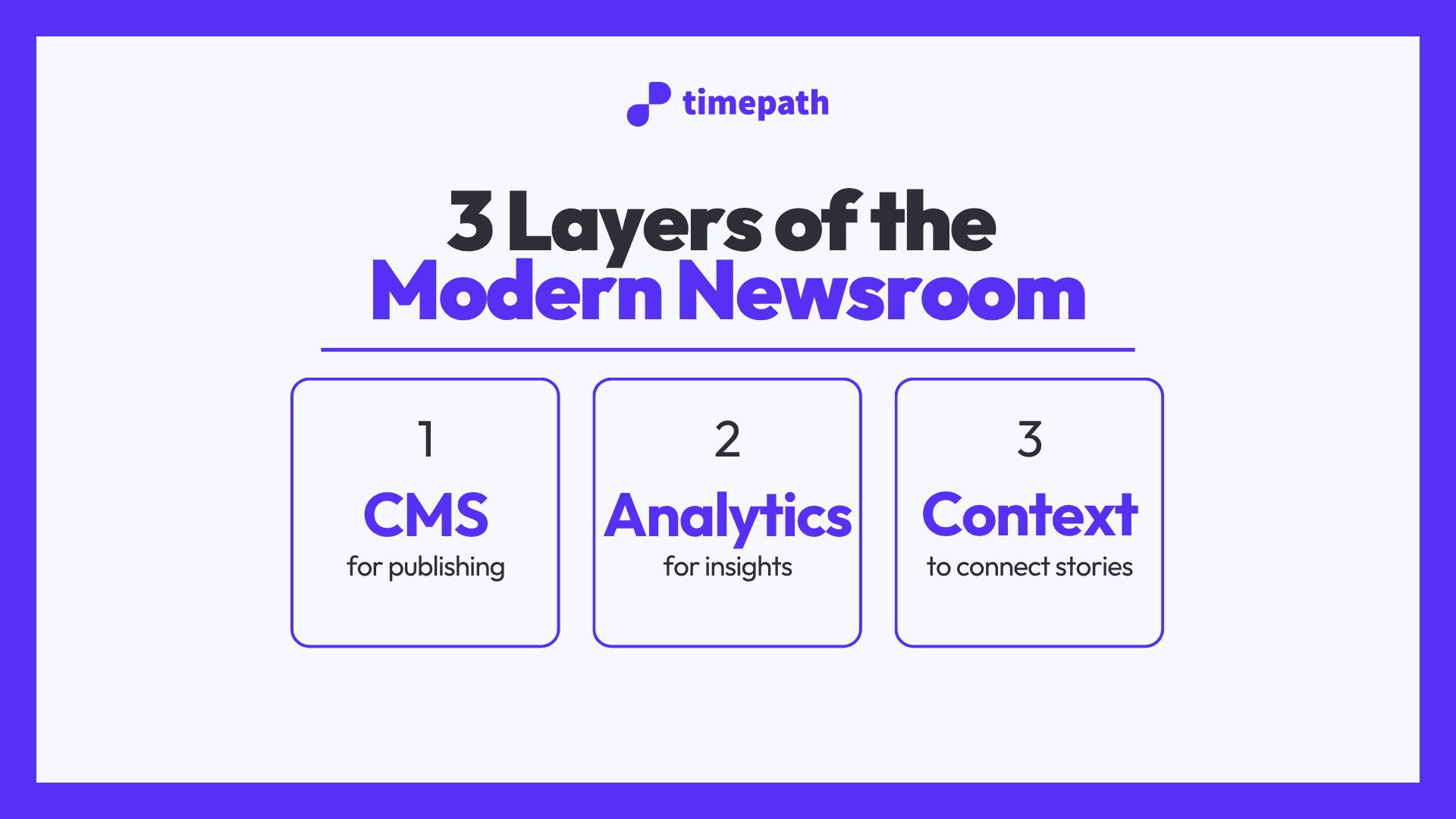
For decades, the digital newsroom has relied on two primary technological pillars:
The CMS (Content Management System): Focused on the act of publishing.
Analytics: Focused on providing insights into audience behavior.
While these tools are essential, they leave a massive structural gap. Newsrooms are missing a context layer — the infrastructure that connects stories over time and provides the "news context" necessary for comprehension. Without this layer, a newsroom is just a collection of archives; with it, it becomes a coherent knowledge base.
What is a Context Layer?
The context layer isn’t about creating more content; it’s about structuring the content you already have. It is the connective tissue that turns a series of articles into a narrative. Simply put, a context layer:
Connects stories over time through interactive timelines.
Organizes coverage into curated collections.
Structures real-time updates via intelligent liveblogs.
By implementing a context layer journalism strategy, newsrooms can reduce the cognitive load on their readers. Instead of asking a user to read 20 different articles to understand a geopolitical shift, the context layer presents the evolution of the story in a single, navigable interface.
Bringing Structure to Life: Examples in the Field
We are already seeing how leading publishers are using Timepath to build this context layer and improve reader retention:
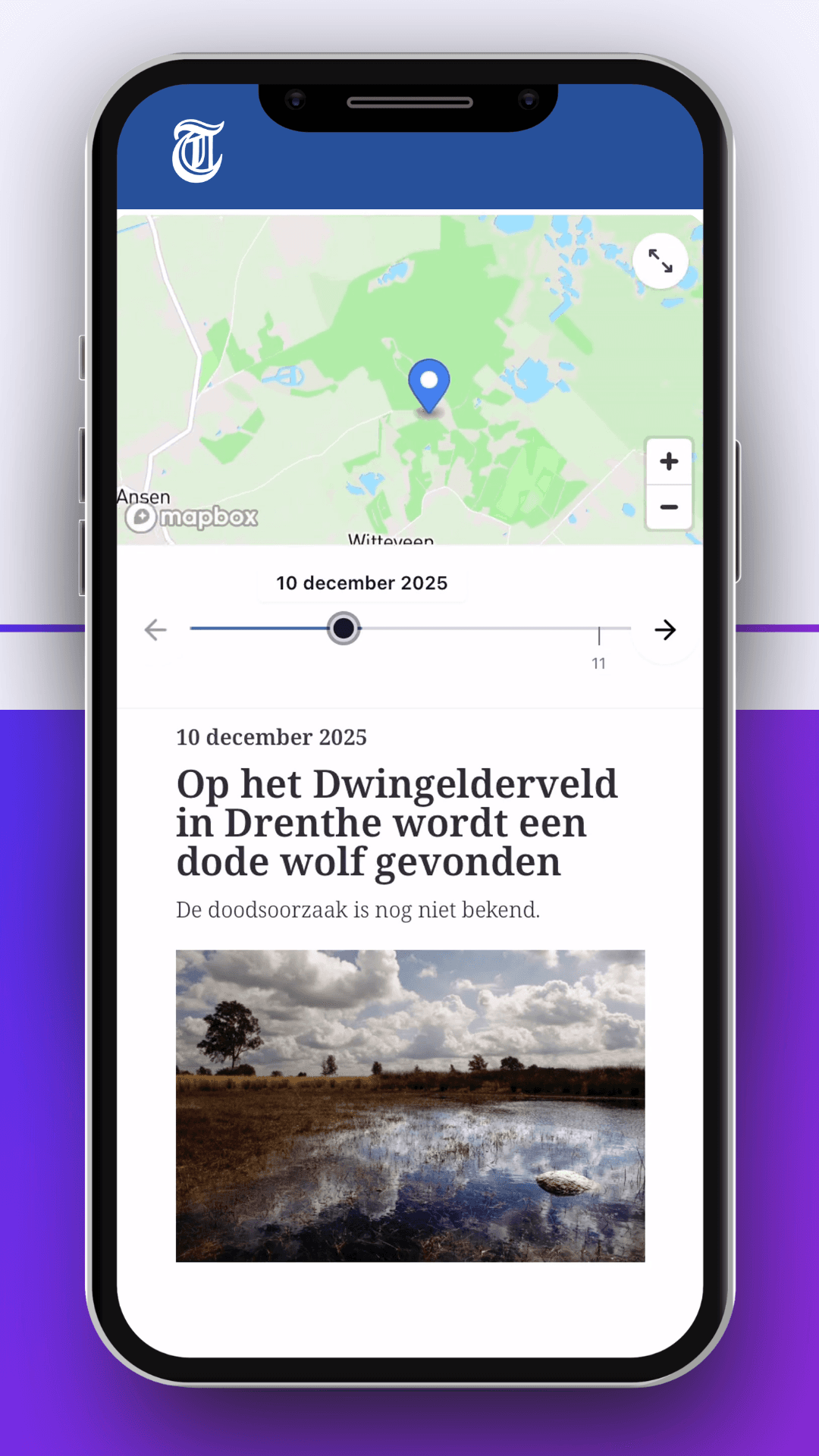
De Telegraaf & Timepath Timeline
When reporting on a niche but developing story, such as the deaths of four wolves within a single week, De Telegraaf used a timeline to show exactly what happened, when, and where. By laying events out together, they transformed a series of local updates into a clear, chilling progression that readers could grasp at a glance. Read more about it here or see the timeline in action.
RTL Nieuws & Timepath Liveblog
During fast-moving international conflicts, RTL Nieuws uses a liveblog format to centralize updates. By fetching social media posts, latest articles, and trending items into one feed, they provide a "single source of truth" that keeps pace with the news cycle without losing the reader in the noise. See the liveblog in action here.
Why This Matters Now: Format Over Relevance
The challenge for modern journalism is not a lack of relevance; it is a lack of format. Younger audiences are not uninterested in the world; they are frustrated by how the world is presented to them. They expect the same clarity and structure from their news sources that they get from other modern digital experiences.
The publishers who will win the next generation of readers are not those who produce the most content, but those who are the most successful at reducing cognitive load. Providing a context layer is a service to the reader — it respects their time and rewards their curiosity by making the world's complexities digestible.
A New Way to Build
At Timepath, our mission is to help the journalism industry work smarter. By listening to editors and journalists at national newspapers, we’ve realized that the "simple timeline" was just the beginning.
Journalism itself isn't the problem. The way we structure and deliver stories is. We don't need more tools to flood the zone; we need infrastructure that connects the dots. It’s time to move past the era of fragmented snippets and toward a future where every story comes with the context it deserves.